Updated July 20, 2026
Two Nights at Camp 3, Kern River Valley: Running A/C on Solar + Generator in a Heat Wave
The short version: we spent two nights at Camp 3 on the Kern River in the kind of heat that makes you rethink your whole power plan. We ran the A/C in short, targeted bursts — a couple of hours through the worst of the afternoon, then a few hours at bedtime — and after that the night cooled off enough to sleep on just the outside air. Dual charging (about 500W of solar plus a small gas generator) kept the EcoFlow topped up the whole time. Day one was hot, hot, hot; day two clouded over just enough to take the edge off. Oh — and the truck blew a coolant hose on day one, so there's a mechanic to thank near the end.
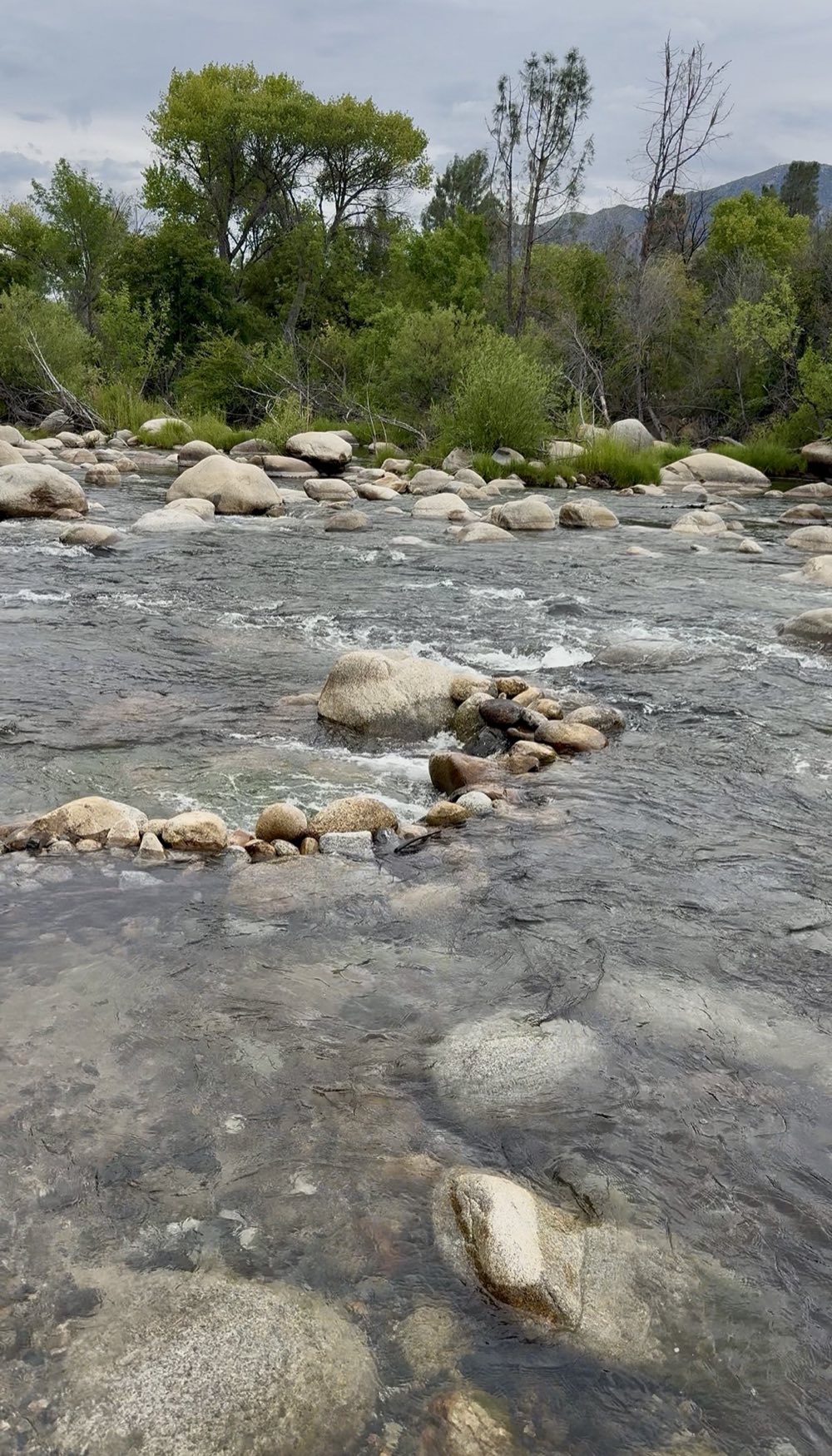
The campground
Camp 3 is one of the string of U.S. Forest Service campgrounds along the Kern River north of Kernville, down in the Kern River Valley. It sits low and close to the water — which is exactly why it's so good in summer and so brutally hot at the same time. The river is right there for cooling off, but the valley floor bakes. There are no hookups, so if you want A/C, the power is on you. That's the whole reason this trip was a test of our setup and not just a weekend by the river.
The rig: a Jayco Jay Feather 23BHM travel trailer with a 13,500 BTU Dometic rooftop A/C — a genuine load, not a little personal cooler. Running that off-grid is the whole challenge.
Hot, hot, hot: the day-one problem
Day one was a full-on heat wave. We didn't run the A/C all day — we saved it for the worst of it, a couple of hours through the peak afternoon. But even in that short window it barely cycled off: in that kind of heat an air conditioner just runs and runs trying to hold the setpoint, and that's what eats your battery. Our 13,500 BTU Dometic rooftop unit pulls roughly 1,300–1,500W while running, with a stiff compressor surge every time it kicks on. Solar alone — even a good 500W array — can't cover a load like that and refill the battery at the same time, because the sun only works part of the day and the panels never quite hit their rated number in real conditions.
So we stopped asking one source to do everything.
Dual charging: solar + generator at the same time
The move that made the trip work was charging the EcoFlow from two inputs at once:
- ~500W of EcoFlow solar soaking up whatever the sky would give during daylight — free, silent watts that ran the A/C in real time and trickled the rest into the battery.
- A small gas generator on the AC input for a fast top-up when the battery dipped — especially in the afternoon peak and to bank charge before bed.
Because the power station accepts solar and AC input simultaneously, the two stack: the generator does the heavy lifting on a quick recharge while the panels keep chipping in. The generator runs far less than it would if it were doing the whole job alone — which means less fuel, less noise, and fewer dirty looks from neighbors. Think of the solar as your baseline and the generator as the closer.
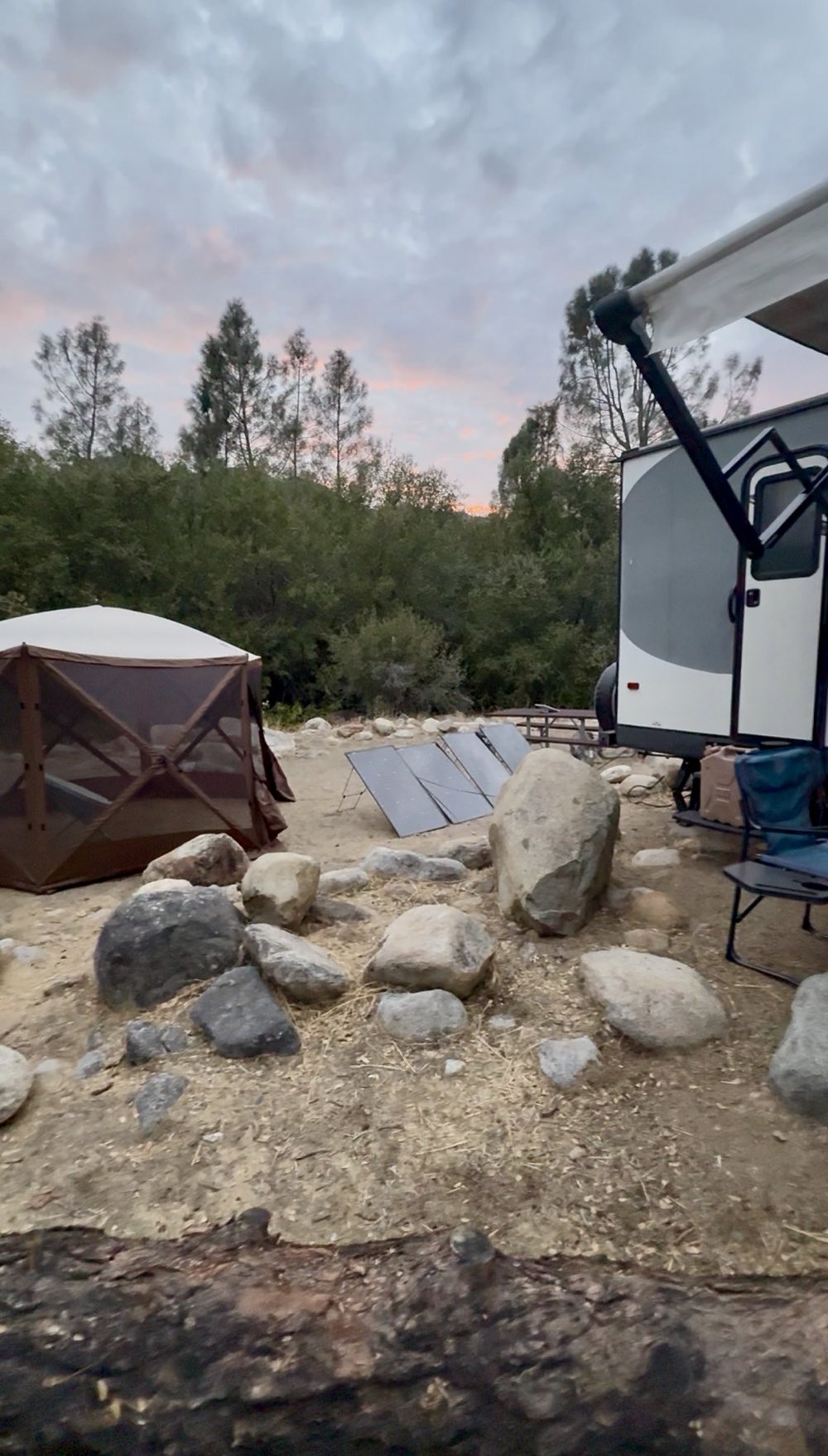
Bedtime, then the night does the work
Evening is when you actually want the cooling, and that's where the plan paid off. We banked a charge before quiet hours (generator plus the last of the evening sun), shut the generator down, and ran the A/C for the first few hours from bedtime to pull the day's heat out of the space. After that, the desert did its thing — by the small hours it had cooled off enough that we switched the A/C off and got through the rest of the night on just the outside air. That's the sweet spot for battery camping: you only pay for cooling during the hours you truly need it, and you wake up with charge to spare and the sun coming back to the panels.
Day two: the overcast rescue
Day two the sky went a bit overcast, and it completely changed the math. Cloud cover knocked the peak temperature down, so the A/C finally started cycling instead of running flat out — and a cycling A/C uses a fraction of the energy. Yes, the clouds also cut solar output, but the drop in A/C demand more than made up for it. We ran the generator noticeably less on day two. The lesson: in this kind of camping, the weather that raises your solar output and the weather that lowers your cooling load are opposites — and on a hot trip, less cooling load is the bigger win.
The curveball: a blown coolant hose (and the mechanic who saved the trip)
No honest trip report skips the part that goes sideways. On day one, the truck blew a coolant hose — the kind of failure that strands you a long way from a shop and can quietly end a weekend. Out in the Kern River Valley, a tow to town plus a shop appointment could have cost us the whole trip.
Instead, a local mobile mechanic came out to us the next day and had us fixed up on-site. Big kudos to Stay Mobile Automotive — owner Eric Brogdon, License #314070 — fast, straight-shooting, and exactly who you want in your phone when you're broken down hours from the nearest garage. They're a true mobile mechanic (they come to you) with a 100% recommend rating across their reviews. If you're anywhere near the Kern River Valley and need a wrench who'll drive out, save the number: (442) 423-5136 — or find Stay Mobile Automotive on Facebook.
What we'd tell the next person
- Don't count on solar alone to run A/C in a heat wave. 500W is a great baseline, but pair it with a generator (or a much bigger battery bank) for the peak.
- Bank charge before quiet hours. Top off while the generator's still allowed, then coast into the night on the battery.
- You may not need A/C all night. Desert nights often cool off — run it to knock the heat down at bedtime, then let the outside air take over. You only pay for the hours you actually need.
- Size the power station for the surge, not the average. A 13,500 BTU rooftop A/C spikes hard when the compressor kicks on and trips undersized inverters — the EcoFlow's big surge headroom started ours without complaint. See our EcoFlow Delta 3 Ultra Plus review.
- Chase shade and use the river. The cheapest watt-hour is the one you don't spend — parking in shade and cooling off in the Kern took real load off the A/C.
- Overcast is your friend on a hot trip. Root for clouds; your cooling load will thank you more than your panels miss the sun.
The setup that ran our A/C off-grid
An EcoFlow power station with enough output for A/C startup surge, ~500W of solar for the daytime baseline, and a generator for the peak. Dual-charge and you can cool a space through a heat wave with no hookups.
Get Member Pricing at EcoFlowNew to sizing solar? Start with our folding solar buyer's guide and boondocking power budget.
FAQ
Can you really run an A/C off solar and a battery while camping?
Yes, but with caveats: you need a power station whose output handles the A/C's startup surge, enough battery capacity for the hours you'll actually run it (often a few hours in the evening, not all night if the temperature drops), and — in real heat — a second charging source like a generator, because solar alone can't cover a heavy A/C load and recharge at the same time.
What does "dual charging" mean here?
Feeding the power station from two inputs at once — solar panels and the gas generator (on the AC input) simultaneously. They stack, so you recharge much faster and run the generator for shorter bursts.
Is there power at Camp 3 in the Kern River Valley?
No — these Kern River Forest Service campgrounds are no-hookup sites. Any A/C or electronics run off whatever power system you bring. Check current campground rules, generator hours, and fire restrictions before you go.
Did the overcast day really use less power?
Meaningfully, yes. Cooler air let the A/C cycle off instead of running flat out, which cut the cooling load far more than the cloudy sky cut our solar input. On a hot trip, lower cooling demand is the bigger lever.
This is a field report from a specific trip in July 2026; A/C draw, solar output, and runtime vary widely with your equipment, the weather, shade, and how cold you keep things. Always check current campground rules, generator hours, and fire restrictions before you go.